
It's one of the most common questions we hear from trailer shoppers:
Should I buy an aluminum trailer or a steel trailer?
The short answer? It depends.
Both can be excellent choices. The better question is: Which one makes the most sense for what you're hauling, what you're towing with and how you plan to use the trailer?
Here's what to consider.
The Biggest Difference: Weight
One of aluminum's biggest advantages is weight.
An aluminum trailer will generally weigh less than a comparable steel trailer. That lower empty weight can have some real advantages.
Depending on the specific trailer and ratings, it may mean:
- Less trailer weight behind your tow vehicle
- More available capacity for cargo
- Easier handling when moving an unloaded trailer
- A good option when trailer weight is an important consideration
But lighter doesn't automatically mean better.
For some customers, the rugged construction, design and price point of a steel trailer make more sense.
What About Strength?
This is where the aluminum-versus-steel conversation can get oversimplified.
Steel is a stronger material than aluminum in some measures, but that doesn't mean an aluminum trailer is automatically weaker.
Trailer manufacturers design around the properties of the material they're using. An aluminum trailer can be engineered to safely handle substantial loads while maintaining a lower empty weight.
Rather than judging a trailer by material alone, look at the complete trailer, its construction, GVWR, payload capacity, axles and intended use.
Rust and Corrosion
This is one of aluminum's biggest selling points.
Aluminum doesn't rust the way steel does, which can make it attractive for customers who regularly expose their trailers to rain, humidity, road salt or other harsh conditions.
That doesn't mean aluminum is maintenance-free. Aluminum can still corrode, and hardware and other components on the trailer may be made from different materials.
Steel trailers require more attention to paint and protective coatings. Chips and scratches that expose bare steel should be addressed before corrosion gets a chance to spread.
With either material, maintenance matters.
What About Durability?
Both aluminum and steel trailers can provide years of service when they're properly designed, used within their ratings and maintained.
The better choice often comes down to the type of work you're doing.
If you're using a trailer in demanding jobsite conditions where it regularly takes a beating, a heavy-duty steel trailer may make sense.
If reducing empty trailer weight and avoiding traditional steel rust are priorities, aluminum becomes very attractive.
This is one of those decisions where how you use the trailer matters more than which material sounds better on paper.
Repairs Are Worth Considering
Trailers eventually get damaged. It happens.
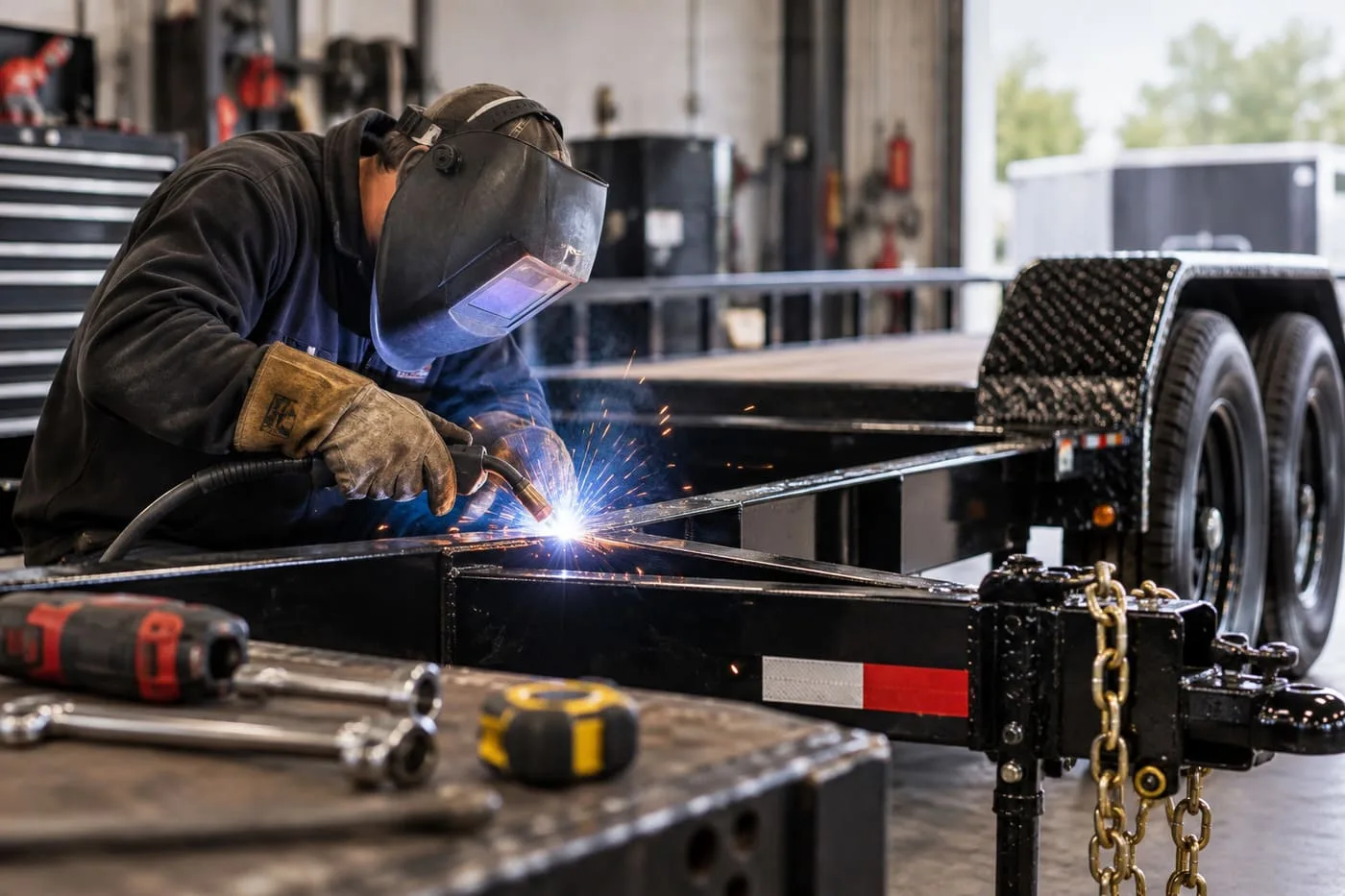
Steel is familiar to many welding and fabrication shops, which can sometimes make certain repairs more straightforward.
Aluminum repair requires the proper equipment and experience.
That's worth considering if your trailer is going to spend its life on jobsites or in other environments where damage is more likely.
What About Price?
Aluminum trailers often have a higher purchase price than comparable steel models.
But purchase price isn't the only number worth considering.
Think about:
- How long you plan to own the trailer
- How frequently you'll use it
- Maintenance
- Corrosion exposure
- Trailer weight
- Payload needs
- Resale value
The least expensive trailer on day one isn't necessarily the least expensive trailer to own.
And the most expensive trailer isn't automatically the best choice either.
So, Which Should You Buy?
Here's the simple version.
Consider aluminum if:
- Lower trailer weight is important to you
- Corrosion resistance is a priority
- You plan to keep the trailer for a long time
- You don't mind paying more upfront for the benefits aluminum provides
Consider steel if:
- You want a rugged work trailer
- Initial purchase price is an important consideration
- Weight isn't as much of a concern
- Your trailer will see demanding jobsite use
- Easy access to traditional steel fabrication and repair is valuable to you
Neither list is absolute.
Trailer design, construction and intended use matter just as much as the material.
Don't Buy the Material. Buy the Right Trailer.
We'd rather help you find the trailer that fits your needs than convince you that one material is always better than the other.
Think about what you're hauling, how often you're hauling it, what you're towing with and where the trailer will spend its life.
Those answers usually make the aluminum-versus-steel decision much easier.
Still debating?
Stop by Country Boy Trailers in Cumming or Mableton and take a look at both. We'll walk you through the differences and help you figure out what makes sense for you.
No engineering degree required.
Behind You All The Way.